
Individual Assessment
Goals are based on the child’s abilities, routines and participation needs.
Personalised Occupational Therapy for children who need support with play, learning, sensory regulation, fine motor skills, self-care and everyday routines. Each programme begins with the child’s strengths, current challenges and family goals.

Goals are based on the child’s abilities, routines and participation needs.
Activities are selected to be purposeful, engaging and connected to daily life.
Parents and caregivers receive practical ideas that can be used between sessions.
Occupational Therapy helps children participate more successfully in meaningful everyday activities. For a child, these activities may include playing, dressing, feeding, writing, attending school, following routines and joining family or social activities.
The therapist considers how movement, coordination, sensory responses, attention, emotional regulation, the environment and task demands may affect participation. Therapy is then planned around practical goals that matter to the child and family.
Joining play, trying new activities, taking turns and participating with others.
Using pencils, scissors, fasteners, utensils, toys and classroom materials.
Responding to sound, touch, movement and other sensory experiences in daily routines.
Dressing, feeding, toileting, grooming, sleep routines and age-appropriate responsibilities.
A single difficulty does not confirm a condition. A consultation can help clarify whether Occupational Therapy assessment or another form of support may be appropriate.
Dressing, feeding, grooming, toileting or managing everyday routines requires more help than expected.
The child avoids drawing, handwriting, cutting, fastening clothes or using small objects.
Sound, touch, movement, food textures, crowds or transitions regularly lead to distress or avoidance.
The child finds it difficult to begin, organise, continue or shift between everyday activities.
Balance, ball skills, playground activities or learning new motor tasks feel consistently difficult.
Therapy priorities depend on assessment findings, the child’s age, family concerns, participation needs and the environments in which difficulties occur.
Support may focus on sensory regulation, routines, play, self-care and participation across home or school.
Practical strategies for attention, organisation, transitions, activity completion and everyday routines.
Understanding sensory patterns and building practical strategies that improve participation and regulation.
Developing hand strength, coordination, pencil control, visual-motor skills and classroom participation.
Building confidence with new movements, body awareness, balance and age-appropriate physical activities.
Supporting feeding, dressing, grooming, toileting, sleep routines and greater age-appropriate independence.
The exact pathway may vary according to the concern and the level of assessment required. Families are kept informed throughout the process.
Discuss concerns, strengths, routines, previous reports and the activities that matter most.
Review participation through clinical observation, relevant tasks and suitable assessment tools.
Agree practical goals, session priorities and home or school strategies where appropriate.
Monitor participation and adjust goals or strategies as the child’s needs and progress change.
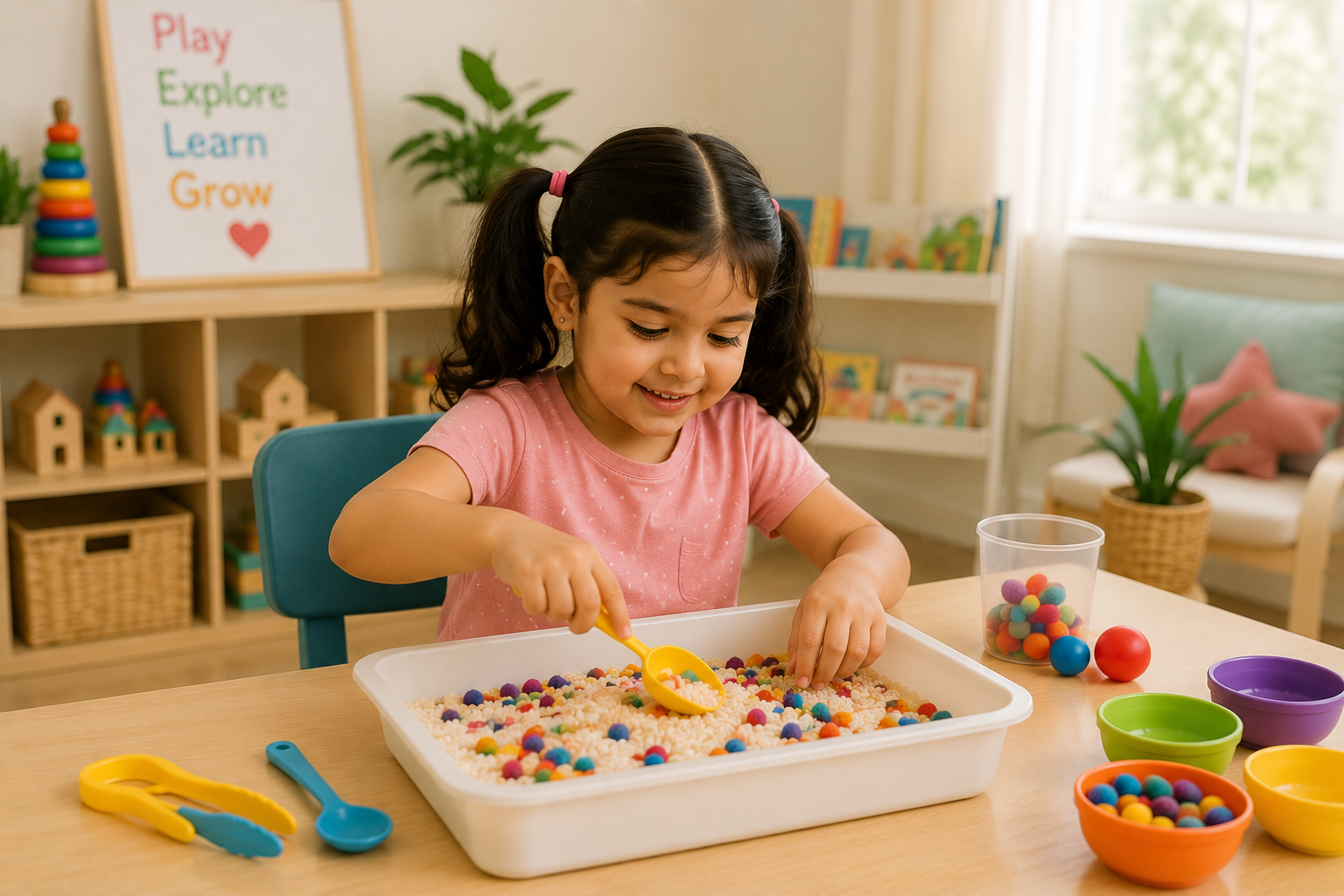
In-clinic sessions may be suitable when direct observation, specialised equipment or hands-on activity is important. Online sessions may support selected goals through caregiver coaching, home-programme review and guided activities in the child’s natural environment.
Direct therapist-led activities, structured observation and access to suitable therapy resources.
Caregiver-supported sessions, practical home strategies and progress review when appropriate.
Parents and caregivers understand the child’s routines better than anyone. Their observations help shape realistic goals and identify strategies that fit naturally into home, school and community life.
Learn how specific skills, task demands or sensory patterns may affect participation.
Receive clear ideas that can be used during ordinary routines without turning home into a clinic.
Notice progress in the activities that matter most rather than focusing only on isolated exercises.
These answers provide general guidance. Recommendations for an individual child depend on assessment, goals and the child’s circumstances.
Still have a question? Contact our teamPediatric Occupational Therapy supports a child’s participation in everyday activities such as play, learning, self-care, handwriting, routines and social participation. Therapy goals are based on assessment and the activities that are meaningful to the child and family.
A diagnosis is not always required to discuss functional concerns. Families may seek guidance when a child is having persistent difficulty with everyday activities. The therapist can advise whether an Occupational Therapy assessment or another referral may be appropriate.
Support can be considered across childhood and adolescence. Suitability depends on the concern, goals and the therapist’s scope of service. Blessings Therapy Centre currently lists support from approximately age two onward, subject to consultation.
Sessions are commonly planned for approximately 45–60 minutes, although the exact duration can vary according to age, attention, goals, assessment needs and the planned session format.
There is no single number that applies to every child. Frequency and duration depend on assessment findings, goals, participation needs, progress, family priorities and how strategies are carried over into daily routines.
Parent or caregiver participation may be recommended depending on the child’s age, goals and session format. Family involvement is especially useful when strategies need to be practised during home routines.
Online support may be suitable for selected goals, caregiver coaching, home-programme review and guided activities. The therapist will consider safety, technology, caregiver availability and whether direct in-clinic assessment or equipment is needed.
Share the activities that concern you and our team will help arrange the most suitable consultation.