
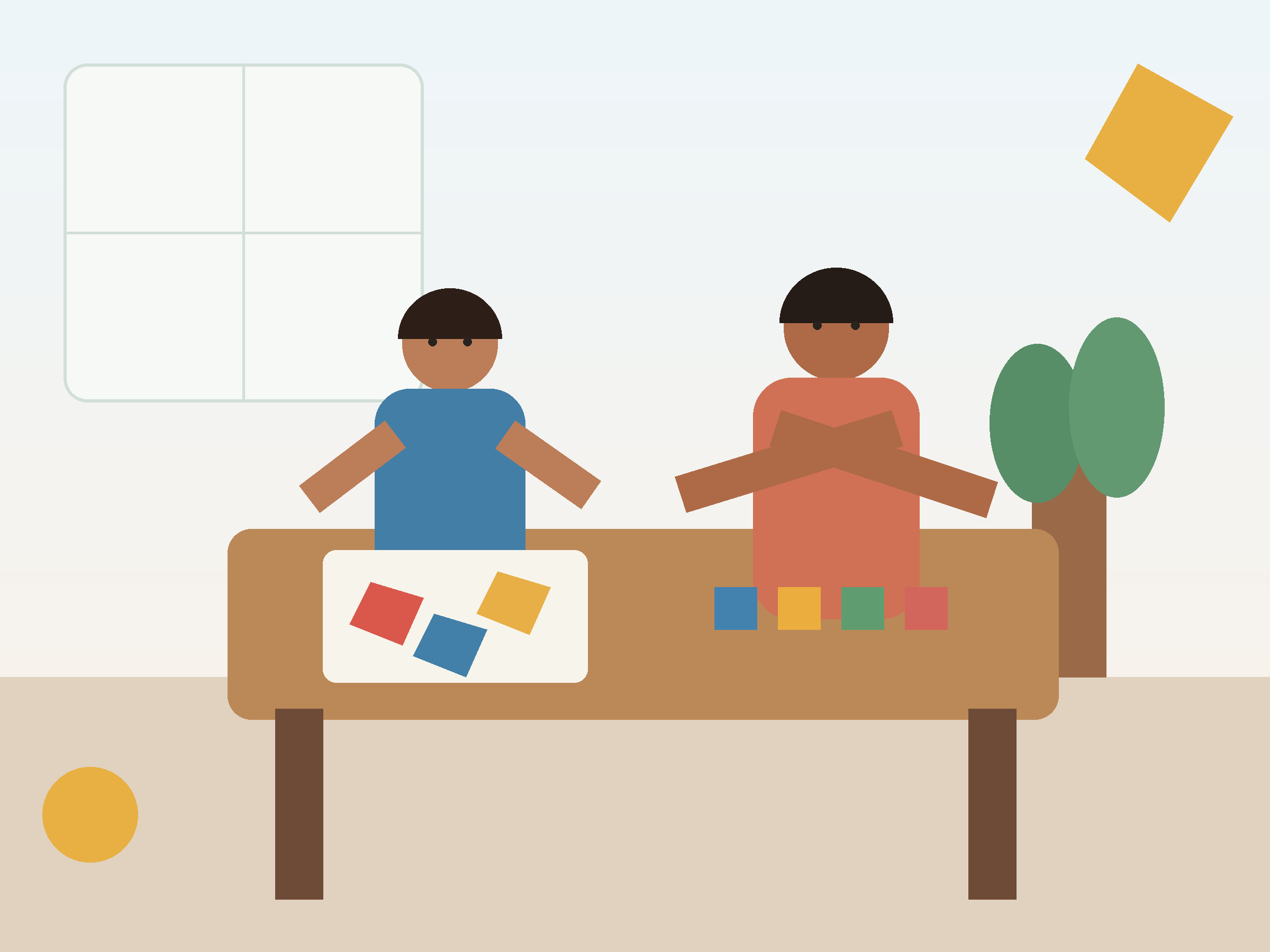
A child can have clear eyesight and still find some visually guided school tasks difficult. Visual-motor skills help the eyes, brain and hands work together when copying a shape, placing objects, drawing, building, cutting or moving information from a board to paper. Difficulties should not be assumed to be “carelessness” or poor effort.
Eyesight, Visual Perception and Visual-Motor Skills
Eyesight includes how clearly a person sees and other aspects assessed by an eye-care professional. Visual perception involves making sense of visual information, such as recognising differences, remembering shapes or understanding spatial relationships. Visual-motor integration involves using visual information to guide movement.
These areas interact, but they are not interchangeable. A child who struggles to copy a pattern may need an eye examination, task-specific teaching, motor practice, environmental adjustment or a combination of supports.
This article complements Early Signs Your Child May Benefit From Occupational Therapy.
Signs Parents and Teachers May Notice
- Difficulty copying shapes, block designs or information from a board
- Losing place when moving attention between a book and notebook
- Uneven spacing or difficulty staying within page boundaries
- Avoiding puzzles, construction games or drawing
- Misjudging where to place an object
- Difficulty using scissors along a line
- Slow completion of visually complex worksheets
- Becoming tired or frustrated during copying tasks
One sign alone does not identify the cause. Consider whether the task is new, whether instructions were understood and whether the child had enough time and suitable equipment.
Analyse the Task Before Naming the Problem
Break the activity into parts. Copying from a board may require the child to locate the correct line, remember a short amount of information, shift gaze to the page, find the right position, form letters and repeat the sequence.
- Is the board information visually crowded?
- Is the child seated where the board is easy to see?
- Can the child copy accurately when the model is beside the paper?
- Does the difficulty increase when language or memory demands increase?
- Is posture stable and are the feet supported?
- Does the child report headache, double vision, eye strain or blurred vision?
Answers help determine whether the next step should involve teaching, environmental adjustment, eye care, occupational therapy or another assessment.
Practical Visual-Motor Activities at Home
Choose playful activities that involve looking and doing rather than repetitive worksheets.
- Copy simple block structures, beginning with two or three pieces
- Complete age-appropriate jigsaws and matching games
- Draw roads, mazes and shapes on a large surface
- Use dot-to-dot, tracing and hidden-picture activities in moderation
- Copy body positions during mirror games or action songs
- Make patterns with beads, pegs, stickers or household objects
- Throw or roll a ball toward a clear target
Keep the difficulty at a level where the child can experience success. Increase one element at a time: more pieces, a smaller model or a longer pattern.
Classroom Adjustments That May Reduce Demand
- Provide a near-point copy on the desk instead of requiring repeated copying from a distant board
- Reduce visual clutter and separate worksheet sections
- Highlight the starting point or relevant line
- Allow additional time for complex copying tasks
- Use larger spaces before expecting smaller writing areas
- Teach the steps directly rather than assuming the child knows how to scan the page
For handwriting-specific concerns, see Handwriting Difficulties in Children.
Why an Eye Examination Matters
Occupational therapy does not replace an eye examination. Parents should arrange assessment by a qualified eye-care professional when there are concerns about vision, persistent headaches, eye strain, squinting, double vision, frequent loss of place or a noticeable change in visual behaviour.
A child may have both an eyesight concern and a visual-motor participation difficulty. Communication between professionals can prevent one area from being overlooked.
When May Occupational Therapy Help?
Occupational therapy may be relevant when visually guided motor tasks consistently limit school participation, self-care, play or confidence. Assessment may involve observation of meaningful tasks, visual-motor activities, posture, hand skills, organisation and environmental demands.
Learn more about Pediatric Occupational Therapy or discuss observations through a Parent Consultation.
Frequently Asked Questions
Is visual-motor difficulty the same as poor eyesight?
No. Clear vision, visual perception and visual-motor integration are related but different. Eye concerns require assessment by an eye-care professional.
Do letter reversals always mean a visual-perception problem?
No. Reversals can occur during early learning and may have several explanations. The child’s age, instruction and overall pattern should be considered.
Can screen games improve visual-motor skills?
Some digital tasks involve visual-motor responses, but they do not replace varied real-world play, drawing, construction, movement and classroom practice.
Should the child practise more worksheets?
More of the same task is not always helpful. Short, graded activities and environmental adjustments may be more effective than prolonged repetition.
Understand the Task Behind the Struggle
A functional review can help separate eyesight concerns, task demands, motor skills and classroom factors.
Explore Pediatric OT | Book Parent Consultation | Contact Us
Medical Information Disclaimer
This article provides general educational information. It does not diagnose a condition, prescribe an individual programme or replace medical, developmental, psychological, nutritional or occupational therapy assessment. Seek guidance from an appropriately qualified healthcare professional regarding individual concerns. For sudden symptoms, serious injury or a medical emergency, seek immediate medical care.
Read the full Medical Disclaimer.