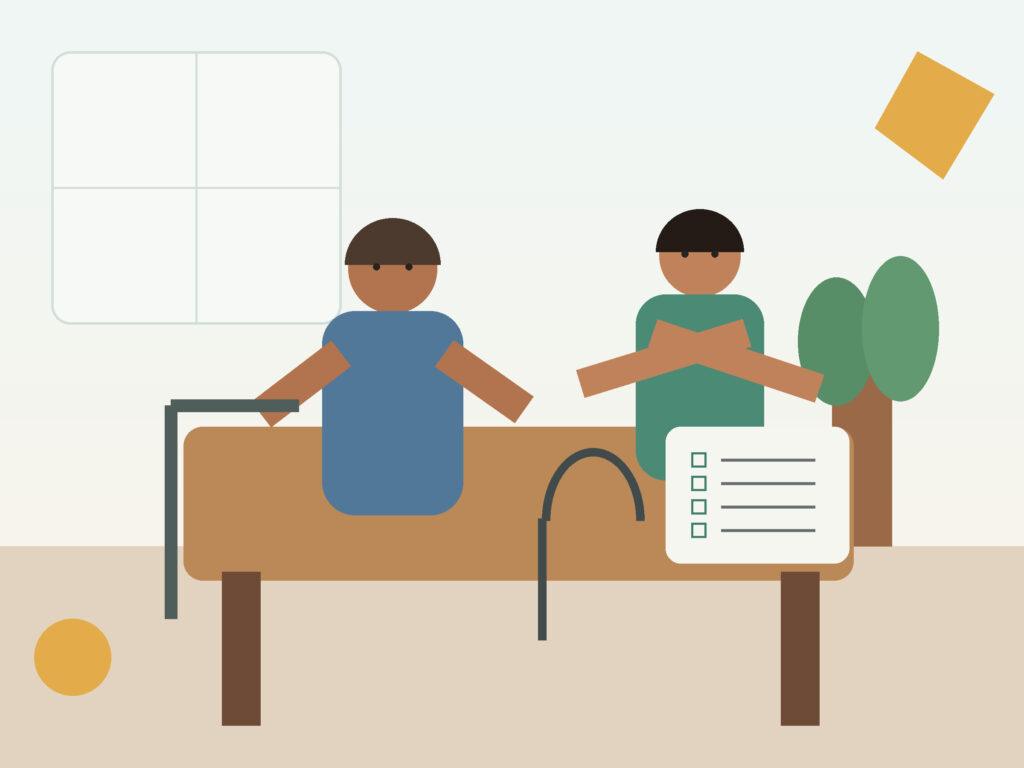

Illness, injury, surgery or a change in health can make familiar activities feel difficult, tiring or unsafe.
Occupational therapy focuses on the everyday tasks that matter to the person—such as dressing, cooking,
working, managing a home, using technology, travelling and participating in family or community life.
What Does Adult Occupational Therapy Focus On?
In occupational therapy, the word occupation means the activities people need, want or are expected
to do in everyday life. These activities may involve self-care, household responsibilities, employment,
education, relationships, rest, leisure and community participation.
The NHS explains that occupational therapy aims to improve a person’s ability to complete everyday tasks
when they are experiencing difficulty. Occupational therapists consider the activities that are difficult
and whether the task, method or environment can be changed.
Read the NHS overview of occupational therapy.
Adult occupational therapy is therefore not limited to exercises or equipment. It considers the interaction
between the person, the activity and the environment. Two people with the same medical diagnosis may have
different priorities because their routines, homes, work, responsibilities and personal goals are different.
Learn more about the centre’s
Adult Rehabilitation service.
Everyday Activities Occupational Therapy May Address
Activities of daily living are the practical tasks involved in caring for oneself and maintaining everyday
independence. University College London Hospitals lists examples such as mobility, transfers, personal hygiene,
bathing, toileting and dressing.
Read the UCLH guide to activities of daily living.
Personal care
Occupational therapy may explore difficulties with:
- Getting in and out of bed or a chair
- Bathing, showering and grooming
- Dressing and managing fasteners
- Using the toilet safely
- Eating and drinking
- Remembering or organising a personal-care routine
Domestic activities
Everyday home responsibilities may include:
- Preparing meals and using kitchen equipment
- Shopping and carrying items
- Laundry, cleaning and household organisation
- Managing appointments, paperwork or medication routines
- Caring for children, relatives or pets
Work, study and productive roles
Some adults need support to return to work, continue studying or manage unpaid responsibilities. Occupational
therapy may consider physical demands, concentration, fatigue, hand function, work routines, environmental
barriers and reasonable task adaptations.
Leisure and social participation
Independence is not only about self-care. Hobbies, religious participation, exercise, meeting friends,
travelling and family roles may also be important rehabilitation goals.
Who May Benefit From Adult Occupational Therapy?
An adult may be referred for occupational therapy when a health condition or change in function affects
everyday participation. This may occur after an illness, injury, operation or hospital admission, or when
function changes gradually with a long-term condition or ageing.
Examples may include adults experiencing:
- Reduced strength, movement, balance or hand function
- Fatigue, pain or reduced activity tolerance
- Changes in memory, attention, planning or problem-solving
- Difficulty organising multi-step routines
- Reduced confidence after illness, surgery or a fall
- Difficulty returning to work or previous responsibilities
- Challenges using the home safely
- A need to learn alternative ways of completing familiar activities
These signs do not identify a diagnosis or confirm that occupational therapy is the only service required.
Depending on the concern, rehabilitation may involve doctors, physiotherapists, speech and language therapists,
psychologists, nurses, social workers, dietitians or other professionals.
WHO describes rehabilitation as a health service that helps people regain, maintain or improve functioning
following illness, injury, surgery, disability or age-related change. The type and duration of rehabilitation
depend on the individual’s needs and condition.
Read the WHO rehabilitation questions and answers.
What Happens During an Occupational Therapy Assessment?
Assessment usually begins with a discussion about what has changed and which activities are most important
to the person. The therapist may ask about health history, current symptoms, home circumstances, work,
responsibilities, support and personal goals.
Depending on the reason for referral, assessment may include:
- Observation of a meaningful everyday task
- Discussion of personal-care and household routines
- Assessment of movement, hand use, coordination or endurance
- Consideration of memory, attention, planning or visual-perceptual skills
- Review of fatigue, pain and activity tolerance
- Assessment of the home, workplace or another relevant environment
- Discussion with family members or caregivers, with appropriate consent
- Identification of risks, priorities and achievable goals
The purpose is not to judge whether a person can complete a task in one “correct” way. It is to understand
what makes the activity difficult and identify safe, practical options that fit the person’s circumstances.
How Occupational Therapy May Support Independence
Recommendations are individual. A strategy that is useful for one person may not be appropriate for another.
The therapist may combine skill development, task adaptation, environmental changes and education.
1. Practising meaningful activities
Therapy may include practising the activity itself—for example, dressing, preparing a simple meal, using a
computer, managing steps in a routine or completing a work-related task. Practice is usually adjusted to the
person’s current ability and safety needs.
2. Learning an alternative method
A familiar activity may be completed in a different order, from a different position or with a modified
technique. The aim may be to reduce effort, improve safety or compensate for a change in movement, sensation,
cognition or endurance.
3. Adapting the task
Complex activities can sometimes be simplified, divided into manageable steps or scheduled at a time when
the person has more energy. Frequently used items may be reorganised so that they are easier to reach.
4. Recommending equipment or environmental changes
Where appropriate, occupational therapists may assess for equipment or modifications that support safe
participation. Recommendations should follow assessment because incorrect equipment can be ineffective or unsafe.
Royal Brompton and Harefield Hospitals describe occupational therapy approaches that may include alternative
strategies, work simplification, equipment and home adaptations. They also note that some people recover fully,
while others may need longer-term adjustment.
Read the hospital occupational therapy overview.
5. Supporting self-management
Education may help a person recognise limits, plan demanding activities, communicate support needs and use
strategies consistently. Self-management does not mean managing alone; it may involve family, carers,
employers and other healthcare professionals.
Fatigue and Energy Conservation
Fatigue can make basic activities take much longer or leave little energy for work, relationships and leisure.
It may be associated with many medical conditions and should be discussed with the treating healthcare team,
particularly when it is new, severe or unexplained.
Occupational therapy guidance may include principles such as:
- Prioritise: identify which activities are essential or personally meaningful.
- Plan: spread demanding tasks across the day or week.
- Position: sit for suitable activities when this is safe and helpful.
- Pace: use planned pauses before exhaustion rather than waiting until symptoms become severe.
- Prepare: gather items before beginning and reduce unnecessary movement.
- Review: notice which methods reduce effort without creating new risks.
Energy conservation is not the same as avoiding all activity. Recommendations should balance rest, meaningful
participation, medical guidance and any rehabilitation programme provided by the treating team.
Supporting Participation at Home, Work and in the Community
At home
A therapist may explore how the person moves through the home, completes personal care, stores essential items,
prepares food or manages steps and transfers. A home assessment may identify environmental barriers and practical
options, but structural adaptations should be recommended only after suitable assessment.
At work
Returning to work may require a gradual plan, task modification, changes to scheduling, ergonomic adjustments,
rest periods or communication with the employer. The appropriate process depends on the person’s condition,
role, local employment rules and medical advice.
In the community
Transport, shopping, social participation and community access can be important rehabilitation goals.
Occupational therapy may help identify barriers, plan graded practice and explore alternative methods of participation.
Through online occupational therapy
Some adults may be able to discuss routines, demonstrate activities in their home environment and receive
coaching through online sessions. Online support is not suitable for every concern, particularly when hands-on
assessment, urgent medical review or in-person safety assessment is required.
Read about Online Therapy and review all
therapy and consultation services.
What Does “Regaining Independence” Mean?
Independence does not always mean completing every activity without assistance. For one person, the goal may
be returning to a previous routine. For another, it may involve using equipment, changing the environment,
accepting limited support or learning a different way to participate.
WHO explains that rehabilitation aims to optimise functioning and help people participate in education, work,
recreation and meaningful life roles. Outcomes depend on the health condition, severity, environment, available
support and individual response.
Read the WHO rehabilitation overview.
A useful goal is specific to the person and connected to daily life. Examples might include preparing breakfast
safely, managing a morning routine with less assistance, using public transport with a plan, returning to one
work responsibility or taking part in a valued family activity.
When May Professional Guidance Be Helpful?
Consider discussing occupational therapy or rehabilitation with an appropriate healthcare professional when:
- Everyday activities have become difficult, unsafe or unusually exhausting
- A person requires increasing help with personal care or household tasks
- There are concerns about managing safely at home
- Fatigue, pain or reduced endurance is limiting participation
- Changes in memory, attention or planning affect daily routines
- Returning to work or previous responsibilities is difficult
- The person needs guidance about equipment or environmental adaptation
- Family members or caregivers are unsure how to support participation safely
How to Prepare for an Occupational Therapy Consultation
Before a consultation, it may help to note:
- Which activities have become difficult
- When the difficulty started
- What help is currently required
- What makes the activity easier or harder
- Any falls, near misses or safety concerns
- How fatigue, pain or concentration changes through the day
- Which activity is most important to address first
- Relevant advice already provided by the medical or rehabilitation team
A short list of priorities can keep the discussion focused on meaningful goals rather than trying to solve
every difficulty at once.
Frequently Asked Questions
Does occupational therapy guarantee that an adult will become fully independent?
No. Outcomes vary according to the person’s condition, severity, environment, goals and response to rehabilitation.
Occupational therapy may support functioning, safety and participation, but it cannot guarantee full recovery.
Is occupational therapy only for people recovering from a stroke?
No. Adults may need occupational therapy after many types of illness, injury, surgery or changes in function.
The appropriate service depends on the person’s needs and medical situation.
What is the difference between occupational therapy and physiotherapy?
The professions can work together. Physiotherapy commonly focuses on movement and physical function, while
occupational therapy focuses on participation in everyday activities. Roles may overlap depending on the setting,
condition and local service model.
Can occupational therapy help with returning to work?
It may help identify task demands, barriers, fatigue patterns, ergonomic needs and possible adaptations.
Return-to-work planning should also consider medical advice, employer processes and applicable employment requirements.
Can adult occupational therapy be provided online?
Some consultations, caregiver discussions, routine reviews and home-based observations may be suitable online.
In-person assessment may be necessary when physical examination, equipment fitting or direct safety assessment is required.
Is a doctor’s diagnosis required before contacting Blessings Therapy Centre?
Adults or family members may begin by describing the functional difficulty. The initial discussion can help clarify
whether occupational therapy appears relevant or whether medical or another professional assessment should come first.
Discuss Difficulties With Everyday Activities
When dressing, cooking, work, fatigue, home routines or community activities become difficult, an occupational
therapy consultation can help identify priorities and suitable next steps.
Explore Adult Rehabilitation
|
Contact Blessings Therapy Centre
|
Read Frequently Asked Questions
Medical Information Disclaimer
This article provides general educational information. It does not diagnose a condition, prescribe an individual
rehabilitation programme or replace medical, occupational therapy, physiotherapy or other healthcare assessment.
Seek advice from an appropriately qualified healthcare professional regarding changes in function, fatigue, pain,
falls or safety. For sudden symptoms or a medical emergency, seek immediate medical care.
Read the full Medical Disclaimer.